
AGNOSTICISM, ATHEISM, AND THE QUESTION OF ABSENCE OF EVIDENCE

Agnosticism can be explained with a simple statement. I will borrow from renowned physicist and science-writer Carl Sagan for this, who said (in the context of searching for extraterrestrial intelligence), “extraordinary claims require extraordinary evidence.” He said this after stating that the “absence of evidence is not evidence of absence.” To say God exists is […]
SOCIAL CAPITAL AND AFFIRMATIVE ACTIONS IN INDIA THE SOCIAL CAPITAL OF CASTE
Social capital is the aggregate influence a person by virtue of his birth and social connections gains in the society. It is the fundamental basis for institution of reservation in Indian society. In India, caste is an important factor of social capital. Caste in India is an exclusivist institution ratified by religion that has created […]
WESTERN STRATEGIC DEPTHS AND THE EMERGENCE OF WEST ASIAN PETROECONOMIES The "Fist of God" in the Making of the Modern Middle East

A few weeks after my relocation to Muscat, I happened to read a controversial and now almost discredited book called The Passing of the Great Race. It was written by Madison Grant, an influential American lawyer, conservationist and eugenicist of the early 20th century. Madison Grant was an adviser to President Franklin Roosevelt and was […]
IDEOLOGY BASED OPINION VERSUS EVIDENCE BASED OPINION Matter of Thought versus Matter of Fact

Ideology driven opinion is fundamentally different from evidence driven opinion. For the sake of this article, I will shorten these terms to IBO ( Ideology Based Opinion) and EBO ( Evidence Based Opinion). It is important to distinguish these two patterns when we engage in any meaningful debate. It is also important to identify individuals who consistently maintain IBO for two reasons: no meaningful debate or exchange of conclusions can be achieved if the debate is between two IBO positions. EBO is not an easy position to gain or maintain. It requires years of retraining to achieve the mental sanity to make EBO. This is because the human moral landscape is full of biases that are based on biological, social and cultural disposition. Social psychologist Jonathan Haidt discusses the divide on social and political issues as being fundamental to the way humans perceive things across five standards: harm/care , fairness/reciprocity, in-group loyalty/tribalism/territorial sense, authority/respect/deference, purity/sanctity. Based on a massive database of cross-cultural comparison, Haidt found that ideological difference on social and political issues is based on the variations by which people grade these five standards of morality. For instance, liberals have a high grading on harm/care and fairness/reciprocity standards, while social conservatives have a higher grading for authority, ingroup loyalty and purity/sanctity standards. Libertarians – free economy champions – are like liberals on most standards, like in-group loyalty and purity/sanctity, but are low on indexes that signify compassion – the standards of harm/care and fairness/reciprocity.
THE ACCIDENTAL PRIME MINISTER INTRIGUES OF THE DELHI DURBAR AND THE FALL OF THE UPA-II
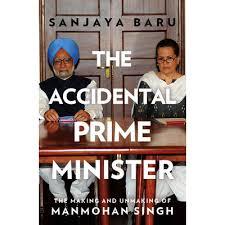
The Accidental Prime Minister is an interesting peep into the intrigues and tribulation of work in the high offices of Delhi. The book has been marred with controversy regarding the timing of its launch in the rundown to the Indian Union general elections of May 2014. The then prime minister’s office had issued a statement […]
SKEPTICISM

Skepticism is a general approach to the world, and not exclusively linked to ‘denial of God’. Most of the people are skeptics except in a few walks of life. As what Richard Dawkins said concerning atheism, all monotheistic religious people are skeptical of all other religion, and all other gods except that of their own. […]